
Inside the Journal
Five minutes a day. Six months of data. A record of how you made it through
Every journal in the series uses the same proven daily framework. What changes is who it's speaking to. The intro pages in each edition are written specifically for your discipline — law enforcement, fire, dispatch, or healthcare. The daily practice is the same. The voice is yours.
Here are a few samples of what you'll find inside.
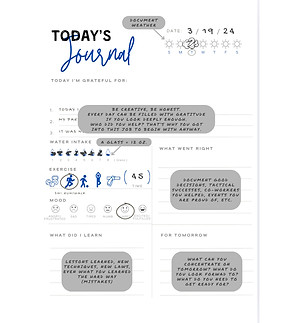
Example Daily Page
Keep track of your day: Weather, exercise, water intake, wins, lessons, etc.
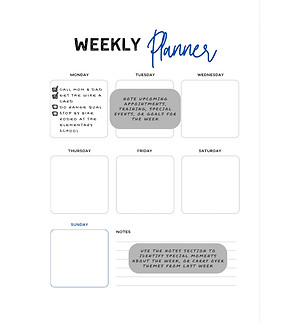
Example Weekly Planner
Schedule your week, write a to-do list, track medications or supplements. It's your week.

Daily Page
Designed for simplicity. Track the important aspects and moments.
If something hits you, there's more room to write every week.
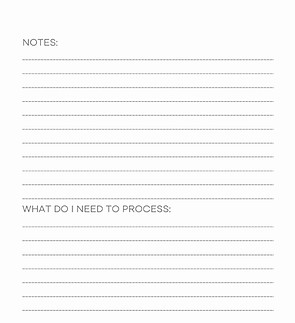
Weekly Highlights
Keep additional notes, but more importantly, remind yourself of the things you need to follow up on.
How People Use It
The Daily Page
Every day starts here. It takes about five minutes — less if you're tired, more if you need it.
Date and Day — Ground yourself in the present. What day is it. What shift. How many hours. Just orienting.
Weather — Track it. More than you think, the weather affects your calls, your mood, and your body. Start noticing.
Gratitude — Three things. That's it. On the worst shifts there is still something. Who did you help? What went right? Why did you get into this job in the first place? Be honest. Be creative. This isn't a performance.
Water Intake — Eight glasses. Circle them as you go. Simple accountability that most first responders ignore until their body forces the issue.
Exercise — Circle the type. Log the time. You already know why this matters.
Mood — One honest circle. Angry. Sad. Tired. Numb. Happy. Fulfilled. No judgment. Just data. Over time the patterns will tell you something worth knowing.
What Went Right — Document good decisions, tactical wins, people you helped, moments you're proud of. The job gives you more of these than you remember at the end of a hard shift. Write them down before they disappear.
What Did I Learn — New techniques. First aid you had to use. Something that went sideways and taught you something. Even the hard lessons count.
For Tomorrow — What do you need to concentrate on? What are you walking into? What do you need to be ready for? One minute of preparation the night before is worth an hour of reaction the next day.
The Weekly Planner
At the start of each week, use this page to map out what's coming. Commitments. Coverage. Family time. Anything worth planning for. The small notes section is yours — use it however you need it.
The End of Week Reflection
This is the most important page in the journal and the one most people skip first.
Don't skip it.
At the end of each week, sit with what happened. The notes section captures details. The "What I Need to Process" section is where you put the things that are still sitting with you — the calls that didn't go the way you wanted, the conversations you're still carrying, the weight that didn't leave when the shift ended.
You don't have to solve anything here. You just have to name it. That's enough to start.
Make It Yours
The journal gives you a structure. What you put in it is entirely up to you. Some people track medications. Some track supplements. Some track family time or hours of sleep or how many times they made their kids laugh that week. Some use the gratitude section to write full paragraphs. Some write three words.
There is no wrong way to use this journal. The only wrong move is leaving it on the shelf.
Pick it up. Fill in what you can. Put it down. Do it again tomorrow.
Six months from now you'll have something most first responders never have — a record of who you were, what you carried, and how you made it through.